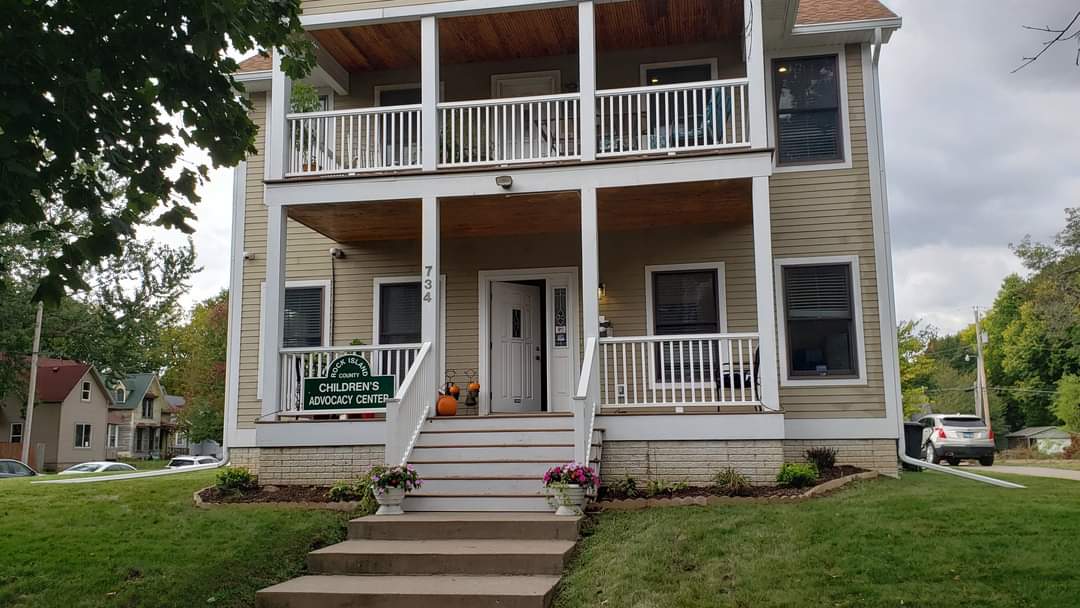
WHAT IS THE ROCK ISLAND COUNTY CHILDREN'S ADVOCAY CENTER
The Rock Island County Children's Advocacy Center is a Not-for-Profit 501c3. We serve the citizens of Rock Island County. The mission of the Rock Island County Children's Advocacy Center (RICCAC) is to reduce trauma to children who are victims of sexual or physical abuse by utilizing a multi-disciplinary team investigation. RICCAC interviews children under the age of eighteen for law enforcement and the Department of Children and Family Service's investigations. The purpose is to coordinate and track the investigation, medical treatment and counseling referrals, and prosecution to protect the best interest of the child victims and their families. All services are provided at no cost.
Prior to the existence of Children's Advocacy Centers (CAC), child victims were interviewed multiple times. The responding officers would interview the child. After the interview, the officer may contact DCFS who would interview the child. Then a police detective would be assigned the investigation and would interview the child. Many times, the State's Attorney would interview the child. As a result, most victims were interviewed between four and seven times reference their abuse. Repeated interviews are traumatic; therefore, Children's Advocacy Centers were formed to reduce the trauma to the victims by eliminating repeated interviews.
The forensic interview process includes advocacy for the victim and their family. RICCAC employs a family advocate who works with the victims and the non-offending family members to meet their needs. We have a full-time therapist that is trained in trauma therapy to work with our victims and their families.
Children who are sexually abused and do not have therapy are more likely to be sexually abused later in life, experience abuse, drug, or alcohol abuse, eating disorders and have difficulty engaging in intimate contact as an adult. Therapy will assist the victims in avoiding these experiences. Family members often experience anger, anxiety, fear, sadness, shock, and guilt when a child is abused. Therapy with family members will assist them in dealing with these feelings and how to assist the child. Victims and family members who receive services avoid the cost to the community for medical services, criminal justice expenses, crisis mental health fees and loss of contributions of individuals affected by sexual violence.